


The landscape of artificial intelligence (AI) development has evolved rapidly, with 2025 marking a pivotal year for innovation driven by open-source technologies. At the heart of this transformation is the Model Context Protocol (MCP), an open standard that enables AI models to interact seamlessly with diverse resources, both local and remote. As enterprises and individual developers seek flexible, cost-effective solutions, open-source MCP servers have emerged as powerful tools to extend AI capabilities.
These servers, freely accessible on platforms like GitHub, empower developers to build scalable applications without the constraints of proprietary software. This article explores six standout open-source MCP servers—Graphiti, Opik, Ragie, Bright Data, Jupyter, and MindsDB—highlighting their features, recent developments, and potential use cases. Whether you’re a data scientist, AI engineer, or hobbyist, these tools offer a gateway to cutting-edge AI development.
Comparison Snapshot
| MCP Server | Key Features | Recent Updates (2025) | Primary Use Case | Why It Stands Out |
|---|---|---|---|---|
| Graphiti (by Zep) | Temporally-aware knowledge graphs, AI memory persistence, OpenAI-compatible, Anthropic/Voyage model support, optional parallel runtime | Improved Docker deployment & docs | Strong, persistent memory with active Discord support | Strong persistent memory with active Discord support |
| Opik (by Comet.ml) | Observability for LLM apps, prompt/project/trace management, metrics, IDE integration (Cursor), SSE transport | Better TypeScript & IDE integration | LLM workflow monitoring & debugging | Tight Comet.ml ecosystem integration for AI ops |
| Ragie (by Ragie.ai) | Multimodal RAG (text/audio/video), timestamp-accurate responses, CLI tools for file & YouTube ingestion | Optimized video streaming | AI apps using diverse data types (e.g., media, education) | Strong multimodal retrieval capabilities |
| Bright Data | 30+ web scraping tools, Scraping Browser sessions, BROWSER_AUTH config, EU privacy compliance | New guide & tools compliant with EU June 2025 laws | Ethical AI web scraping & real-time data extraction | Adapts to complex sites like Zillow & Best Buy |
| Jupyter (by Datalayer) | Control Jupyter notebooks via AI, create/run/manage cells, integrates with Claude, 100% open source | Stability improvements in cell execution | Data science & AI prototyping in notebooks | Enterprise-grade AI needs multi-source data |
| MindsDB | Federated data access (200+ sources), MySQL/MongoDB/cloud support, new connectors, xAI integration | Seamless AI integration with the Jupyter ecosystem | Optimised video streaming | Broad integration support & strong contributor base |
What Are Open-Source MCP Servers?
Open-source MCP servers are specialised software implementations of the Model Context Protocol, an open standard designed to facilitate secure interactions between AI chatbots and external resources. Available under permissive licenses on platforms like GitHub, these servers allow developers to extend AI functionalities—such as memory retention, data querying, web scraping, and notebook integration—without relying on proprietary ecosystems. In 2025, their significance has surged due to the growing emphasis on community-driven innovation, aligning with trends like decentralised AI and ethical data practices.
Top 6 Open-Source MCP Servers
Graphiti

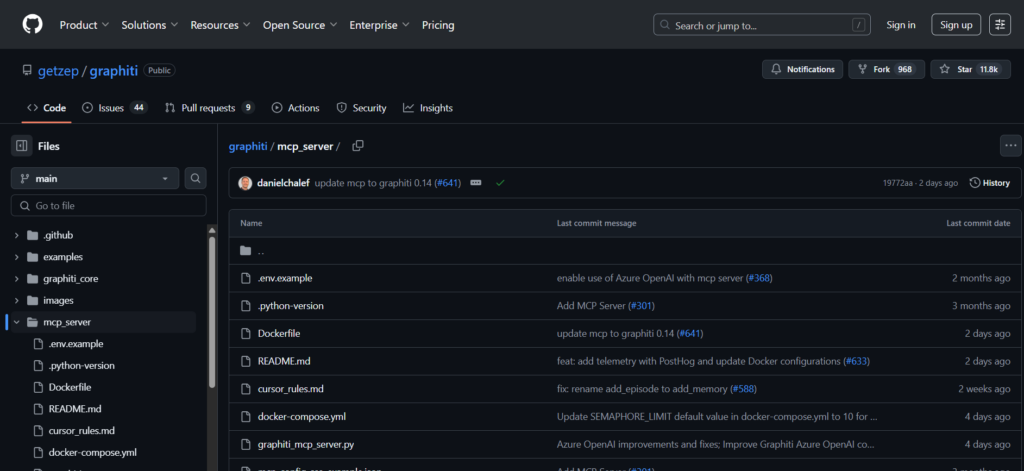
Graphiti, developed by Zep, is a pioneering MCP server that leverages temporally-aware knowledge graphs to serve as an AI agent’s memory. Recent updates, dating back approximately two weeks to mid-June 2025, have enhanced Docker deployment options and documentation, making them more accessible to developers. Key features include optional parallel runtime support via environment variables USE_PARALLEL_RUNTIME and compatibility with many AI models, with optional Anthropic Claude or Voyage model support. Graphiti excels in use cases that require persistent memory, such as conversational AI assistants, and its active Discord community (#Graphiti) offers robust support.


Opik

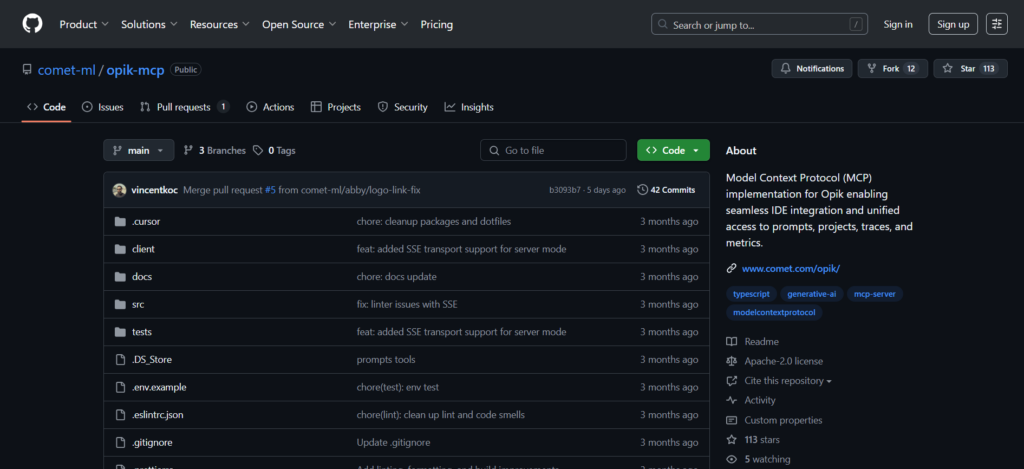
Developed by Comet.ml, the Opik MCP server focuses on observability for large language model (LLM) applications. Updated recently, it has enhanced the pull requests have improved TypeScript support and IDE integration, notably with Cursor via experimental SSE transport. The server offers a unified API for managing prompts, projects, traces, and metrics, with standard I/O transport for production environments. This makes Opik ideal for developers needing to monitor and trace LLM workflows, a topic emphasised at the AI Dev Summit in San Francisco earlier this year. It’s integration with Comet.ml’s ecosystem ensures a supportive community and ongoing enhancements.
Ragie

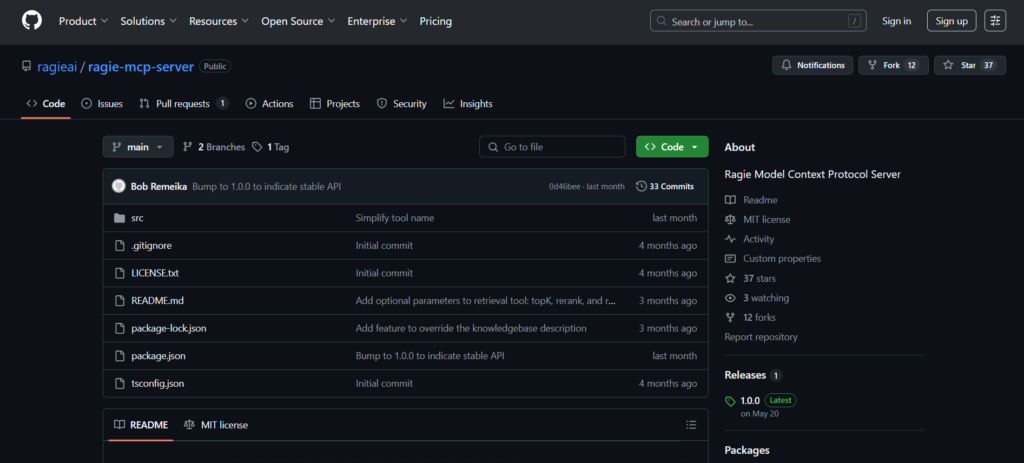
Ragie.ai’s Ragie MCP Server introduces multimodal Retrieval-Augmented Generation (RAG) capabilities, launched with version 1.0 in Spring 2025. Last updated on May 19, 2025, recent commits have optimised video streaming, aligning with its announcement. This server supports audio and video ingestion, delivering timestamp-accurate responses via a single-tool-call interface. Command-line tools for importing files and YouTube content enhance its versatility. Ragie is perfect for developers building AI applications with diverse data types, such as educational platforms or media analysis tools, and its growing user base signals strong potential for future development.
Bright Data

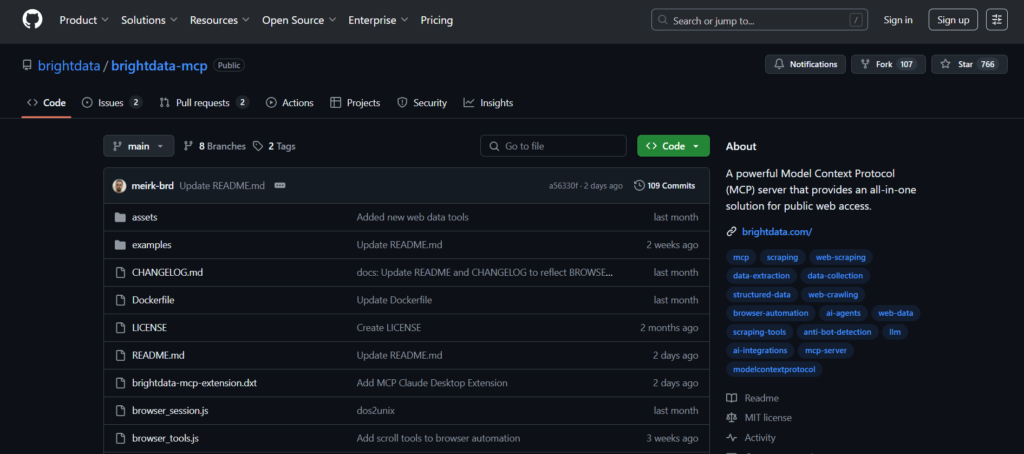
The Bright Data MCP Server provides a suite of 30+ tools for web scraping and interaction, updated on June 11, 2025. Recent updates include a step-by-step guide and new tools compliant with EU privacy regulations effective June 2025. Featuring Scraping Browser sessions with BROWSER_AUTH configuration, it dynamically adapts to site structures, handling complex targets like Zillow or Best Buy. This server is invaluable for ethical web scraping and AI-driven data extraction, offering real-time data flow capabilities. Bright Data’s developer forums provide additional resources, making it a go-to for web-centric AI projects.
Jupyter

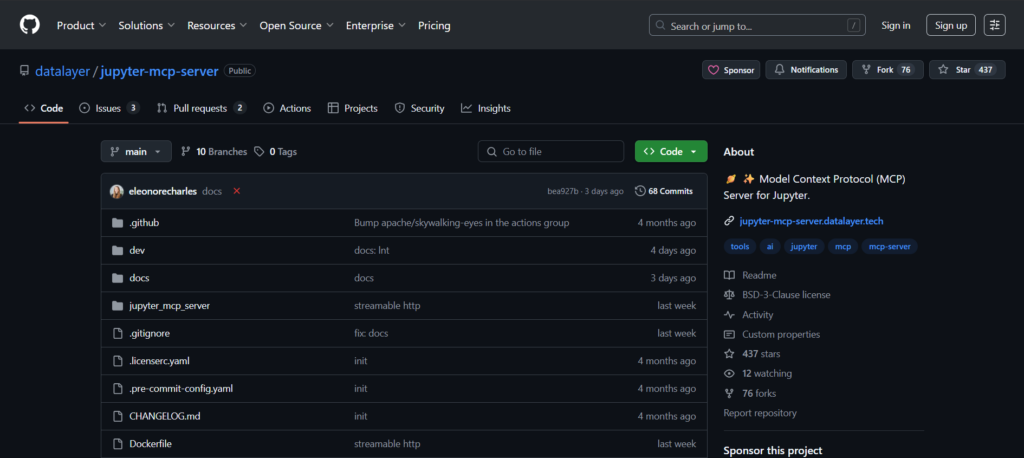
Datalayer’s Jupyter MCP Server enables control of Jupyter notebooks via AI models like Claude. Updated one month ago, recent contributions have stabilised cell execution. This 100% open-source tool allows creation, execution, and management of code and markdown cells, integrating seamlessly with Jupyter’s ecosystem. Its detailed README offers setup guidance, making it ideal for AI/ML developers prototyping AI solutions. The repository’s open contribution model encourages community input, positioning it as a valuable resource for educational and research applications.
MindsDB


MindsDB’s MCP Server stands out for unifying data across 200+ platforms and databases. Recent enhancements include new connectors and performance optimisations, supported by a recent partnership announced in April 2025. This server enables federated data querying from clients like Cursor and Claude Desktop, integrating with MySQL, MongoDB, and cloud services. Its demo setup showcases practical applications, making it suitable for enterprise-grade AI projects requiring multi-source data integration. With a strong contributor base, MindsDB is a cornerstone of modern data-driven AI development.
Also Read: Top 7 Paid MCP Servers
Trends and Insights
The rise of these MCP servers reflects key 2025 AI trends, including memory systems (Graphiti), multimodality (Ragie), and data unification (MindsDB). The xAI Innovate 2025 conference highlighted memory-driven AI, while EU privacy regulations have shaped tools like Bright Data. Community-driven development, evident in frequent GitHub updates, underscores the collaborative spirit of open-source projects. Looking ahead, these servers are poised to evolve with advancements in AI reasoning and cloud integration, as noted by industry leaders at recent summits. This ecosystem not only democratizes AI development but also sets the stage for innovative applications in the coming years.
Also read- 7 Best FREE AI Chatbots That Will Blow Your Mind
Getting Started
- Clone the repository of interest using Git (e.g.,
git clone https://github.com/getzep/graphiti.git). - Install required dependencies as outlined in the repository’s README file.
- Configure environment variables or settings specific to the server (e.g., API keys, database credentials).
- Run a simple test project, such as a memory-enhanced chatbot with Graphiti or a data query tool with MindsDB, to gain hands-on experience.
- Seek support via GitHub issues or community channels like Discord, and consider contributing code or feedback to enhance the project.
Also read- Best AI Coding Assistants for 2025
Open-Source MCP Servers for Developers: Conclusion
The six open-source MCP servers—Graphiti, Opik, Ragie, Bright Data, Jupyter, and MindsDB—represent the forefront of AI development in 2025. Each offers unique capabilities, from memory retention to multimodal RAG and federated data access, catering to a wide range of developer needs. Their availability on GitHub ensures accessibility and encourages innovation through community collaboration. As the AI landscape continues to expand, these tools provide a foundation for building scalable, ethical, and cutting-edge applications. We invite you to experiment with these servers, contribute to their evolution, and join the thriving open-source AI community shaping the future of technology.
Frequently Asked Questions (FAQs)
What is an MCP server, and why use open-source?
MCP servers enable AI to interact with resources via the Model Context Protocol. Open-source versions like Graphiti offer free, customizable code, aligning with 2025’s decentralised AI trends, saving costs, and fostering community innovation.
How do I start with Graphiti or Jupyter?
Clone the repository (e.g., git clone https://github.com/getzep/graphiti.git), install dependencies, configure settings, test a project, and seek support via GitHub or Discord.
What sets these servers apart?
Graphiti aids memory, Opik tracks LLMs, Ragie handles multimodal data, Bright Data scrapes web, Jupyter manages notebooks, and MindsDB unifies data.
Any legal/ethical concerns?
Yes, comply with EU privacy laws (June 2025) for web scraping (e.g., Bright Data) and respect data source terms to ensure ethical use.
How can I contribute?
Explore GitHub issues, test servers, report bugs, submit pull requests, and engage in communities like Discord to enhance these tools.


