
Key Takeaways:
- Ondo Finance seeks SEC no-action relief for tokenized securities model on Ethereum.
- Structure improves utility without altering existing legal framework for securities.
- Bitgo custody supports tokenized entitlements on Ethereum for operational processes.
Ondo Finance Advances Blockchain-Integrated Recordkeeping Model
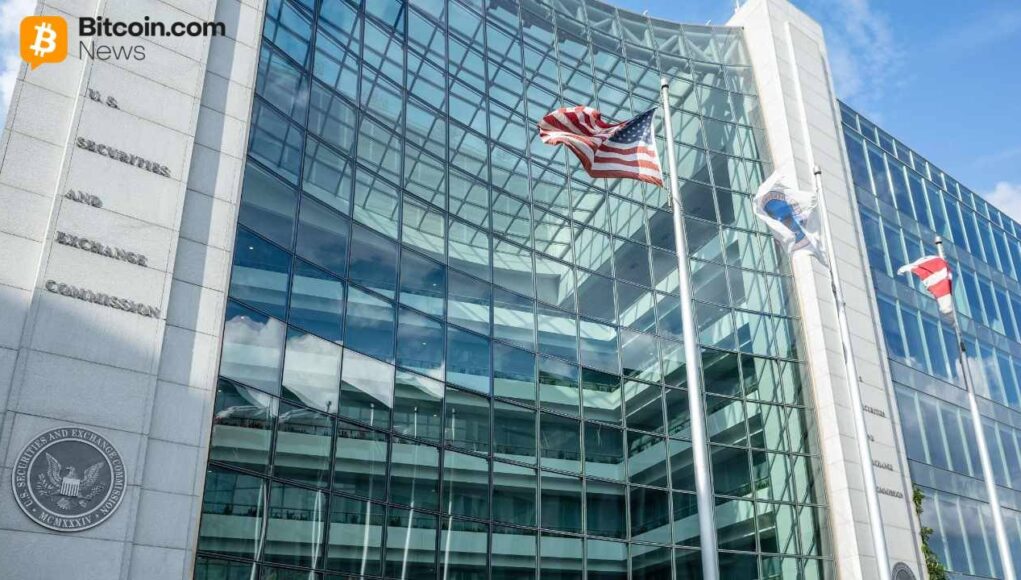
Blockchain integration into regulated securities markets is advancing toward architectures that combine traditional custody with on-chain efficiency. Digital asset firm Ondo Finance submitted a no-action letter request on April 13 to the U.S. Securities and Exchange Commission (SEC) Division of Trading and Markets tied to Ondo Global Markets (OGM). It seeks assurance that its Ethereum-based model would not trigger enforcement action. The proposal introduces a model in which blockchain is used for recording and administering certain securities entitlements while the existing legal, custody, and recordkeeping framework remains in place.
Positioning the request as a limited operational step, Ondo Finance stressed that the approach does not change how products are structured. The company stated:
“We think this structure can make OGM products more useful without changing the basic legal framework that supports them.”
It further emphasized scope, stating: “It does not ask the SEC to rewrite securities law or approve every form of tokenized security. It asks for confirmation that SEC staff would not recommend enforcement action if we proceed with a specific model for recording and administering certain securities entitlements in tokenized form on Ethereum Mainnet in support of OGM products.” The request noted: “OGM products would remain what they are today: tokenized notes that provide non-U.S. investors with exposure to U.S.-listed stocks and ETFs.”
Rather than altering investor rights or legal classification, the model applies blockchain to how positions are recorded and administered. The structure introduces a tokenized representation alongside existing records without replacing them. By keeping custody, settlement, and ownership unchanged, the design fits within current securities law while enabling more efficient reconciliation and collateral monitoring.
Three-Layer Framework Connects Ethereum With Custody Systems
The filing describes three distinct layers that are kept separate. First, the offshore layer consists of OGM products, which are tokenized notes. These products are sold outside the United States. Second, the collateral layer includes U.S.-listed stocks and ETFs held through the Depository Trust Company system and recorded by Alpaca Securities. Third, the recordkeeping and control layer uses Ethereum Mainnet to support the reconciliation and administration of securities entitlements tied to that collateral.
Ondo explained:
“What changes is that, in a limited set of circumstances, the relevant securities entitlements would also be represented in tokenized form on Ethereum Mainnet and held by our custodian Bitgo to support recordkeeping and operational processes.”
This separation ensures blockchain mirrors ownership claims without replacing the legal record.
Broader implications center on whether public blockchain infrastructure can operate within regulated markets under existing rules. The company stated: “An SEC staff no-action position does not create a new rule. What it can do is create room for a specific, bounded model to move forward without waiting for a longer rulemaking process.” If accepted, the approach could support blockchain-based systems operating alongside traditional financial infrastructure while maintaining compliance standards.