


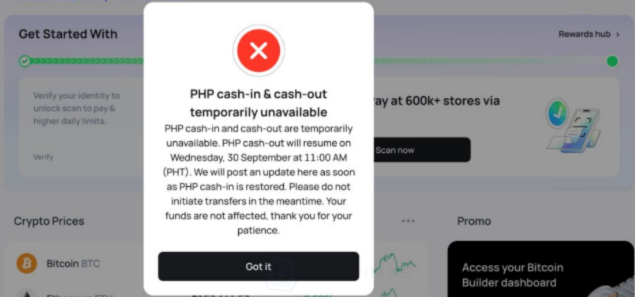
Update: While the PPMI/BSP advisory technically permitted Coins.ph to continue outbound fund transfers (Originating Financial Institution status), Coins.ph has temporarily halted all PHP cash movements internally (including cash-outs) to implement technical or operational adjustments, with outbound transfers slated to resume Sept. 30 at 11:00 AM PHT.
Original article follows:
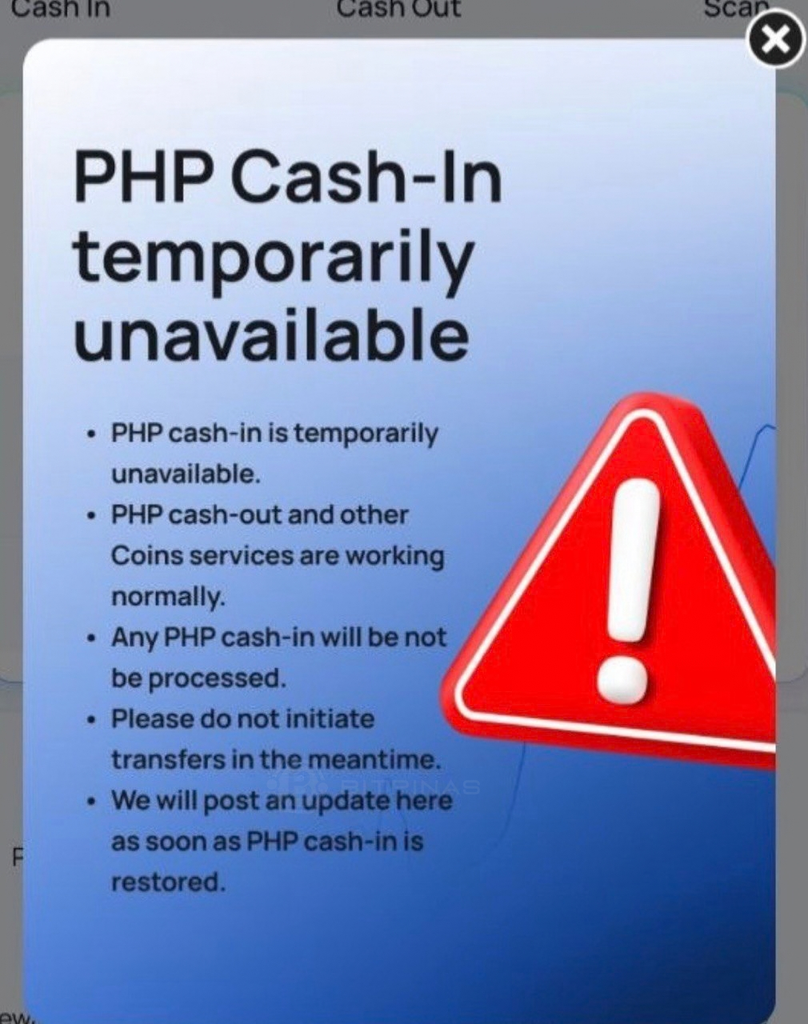
The Bangko Sentral ng Pilipinas has ordered a partial suspension against DCPay Philippines Inc., the e-wallet operator behind Coins.ph, temporarily blocking inbound money transfers across the InstaPay and PESONet automated clearinghouses.
The Philippine Payments Management Inc. notified financial institutions of the directive through PPMI Advisory No. 2026-0929-029. The advisory mandates immediate implementation across the national payment network pursuant to BSP Monetary Board Resolution No. 839.
BitPinas has sent an inquiry to Coins.ph but has yet to receive a reply at the time of publication.
Under the regulatory directive, DCPay faces specific restrictions on incoming funds while retaining capabilities for outbound transactions and retail merchant payments:
- DCPay is suspended from receiving or accepting incoming credit transfers cleared via InstaPay or PESONet. This restricts incoming person-to-person transfers, incoming InstaPay QR credit transfers and DCPay’s pilot participation in InstaPay for Business.
- Senders attempting to cash in or transfer money into a Coins.ph wallet from external banks, such as BDO, BPI and UnionBank, or e-wallets such as GCash and Maya, will experience rejected transactions.
- However, DCPay remains fully authorized to process outbound fund transfers. Wallet holders can continue sending money out of their Coins.ph accounts to other Philippine bank accounts and e-wallets.
DCPay’s participation in person-to-merchant payments through QRPh, the national standard, also remains unaffected. Account holders can continue scanning QRPh codes at store checkouts to pay for goods and services using their existing account balances.
While consumer services are unified under the Coins.ph brand, the platform operates under two legally distinct BSP-regulated entities.
- DCPay Philippines Inc. holds an electronic money issuer license from the BSP. It manages Philippine peso wallet balances, bank deposit integrations and fiat payment processing. This is the entity subject to the partial suspension order.
- Betur Inc. holds a virtual asset service provider license. It powers cryptocurrency trading, digital asset wallets and custody services.
Because the suspension explicitly targets DCPay’s banking clearance, virtual asset trading services hosted under Betur remain structurally distinct, though fiat cash-ins via local banking rails to fund those trades are affected by the inbound transfer pause.
The suspension impacts recent expansions of the platform’s integration with the national payment standard across its network of more than 700,000 merchants. (Read More: How Coins.ph and Bayad Make Paying Meralco, Telco, and Government Bills Faster)
Coins.ph recently integrated QRPh payment capabilities that allow users to spend cryptocurrency balances, including USDT, USDC, Bitcoin and Ethereum, directly at QRPh-compliant retail stands, automatically converting assets to pesos at checkout. (Read More: Coins.ph Expands QRPh Crypto Payments to Support Bitcoin and Ethereum)
Because the BSP directive explicitly exempts person-to-merchant transactions, Coins.ph users can still spend their stored peso and cryptocurrency balances via QRPh at participating stores. However, individuals or businesses using Coins.ph personal QR codes or InstaPay for Business to receive funds from external bank accounts will be unable to process those inbound transfers until the central bank lifts the suspension.
This article is published on BitPinas: BSP Suspends Inbound InstaPay and PESONet Transfers for Coins.ph E-Wallet Operator
What else is happening in Crypto Philippines and beyond: