

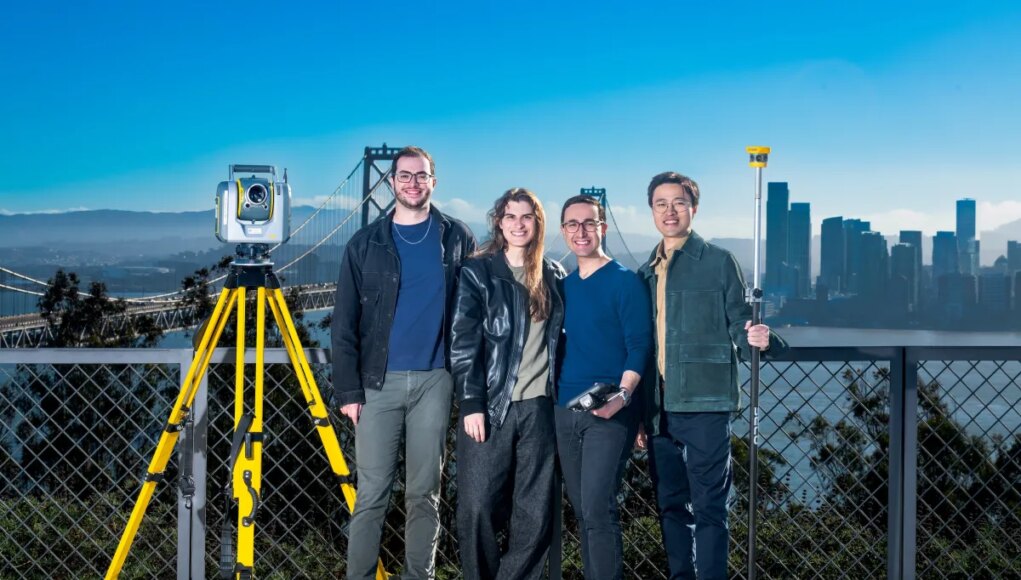
When Alex Baikovitz co-founded Mach9 Robotics in 2021, his goal was to build a better, faster, and cheaper way for civil engineers to do visual inspections. The company aimed to cut through red tape and modernize the slow, outdated processes that bog down construction in the United States.
Within a few years, Mach9 Robotics had built that hardware, but the effort led Baikovitz to a realization: hardware wasn’t the bottleneck.
“We saw how tedious it was for civil engineering organizations to take data from these amazing laser scanners and image data capture systems and turn that into a usable survey,” he told TechCrunch in an interview, referring to a detailed map of a site that engineers use for design work. “The real pain was in their workflows,” he said, and “how to turn all the endless amounts of data that they’re able to collect into . . .information that people can use to make the best design and asset management decisions across the board.”
So Baikovitz dropped “Robotics” from the company’s name and pivoted to developing AI-powered computer-aided design (CAD) software instead. The bet paid off, as Mach9 has racked up nearly 100 customers for the private beta of its software, and they’ve used it on more than 2,500 projects to date.
That momentum helped Mach9 unlock new funding. On Wednesday, the startup announced a $34 million Series A funding round co-led by First Round Capital and Bessemer Venture Partners. Also throwing in were Prudence, an early-stage, New York-based firm that focuses on investing in AI software use cases for construction and real estate, and Quiet Capital, a VC firm already on the cap table.
Mach9 is one of a number of startups racing to modernize the planning-to-building pipeline for construction and infrastructure. In August, a startup called CivilGrid raised $26 million to grow what it calls the “Google Maps for the underground.” Meanwhile, Blueprints AI, which uses AI to produce code-compliant, permit-ready architectural blueprints in just a few minutes, was among the top 200 companies in the Startup Battlefield competition at last week’s TechCrunch Disrupt.
Baikovitz said Mach9 is focused on disrupting CAD software because it’s one of the slowest and most labor-intensive pieces of that overall pipeline.
“It takes months to be able to deliver a project, and about a week per mile for someone to do manually in the legacy incumbent software that’s built by the Autodesk and Bentley Systems of the world,” he said.
Mach9 says its software automates a lot of that work, making the process 10 times faster and dramatically reducing costs. This allows customers doing surveying and civil engineering work to “expand their own capacity and take on more types of work, bigger projects, and expand the reach of how reality-capture data can influence major infrastructure decisions,” Baikovitz said.
Baikovitz said Mach9 developed and trained its own in-house AI models to reach the centimeter-accurate level that construction and infrastructure work requires.
“That’s not something that a lot of off-the-shelf models are able to do or deliver at in any capacity,” he said. “A big part of what our development process has looked like since 2024 has been, how do we build the industry leading models that can turn imagery or these multimodal image and laser scan data sets into survey grade like geometry, like tracing out the curbs, the pavement striping, all of this exactly how our customers want it to be at the accuracies that the industry demands.”
Mach9’s AI CAD system takes the survey data and creates a first draft of a plan, which engineers can then refine. The startup is “giving them all of the tools to draw, remove, adjust vertices, assess the quality of the AI-generated model, so that they can put effectively their name behind the deliverable that they’re producing, because there is a lot of liability in this particular industry, and it requires licensed professionals that know what they’re looking at,” Baikovitz said.
As for the funding, Baikovitz said his startup will split it between improving the product, hiring industry experts, and scaling “all parts of our organization to keep up with where the market is taking us.”
In retrospect, Baikovitz said he’s thankful that he initially went down the hardware path. It gave his startup something to pitch to potential customers, and it was largely those customers who told him they didn’t need better devices to capture data.
“I’m not interested in getting this cheaper, lower-cost hardware,” he remembers one VP telling him. But better software could “improve our efficiency in delivering these big statewide transportation mapping initiatives,” he said. He added that such projects help make states that Mach9 has worked with, like Texas, “much more like safe [and] effective.”
When you purchase through links in our articles, we may earn a small commission. This doesn’t affect our editorial independence.