

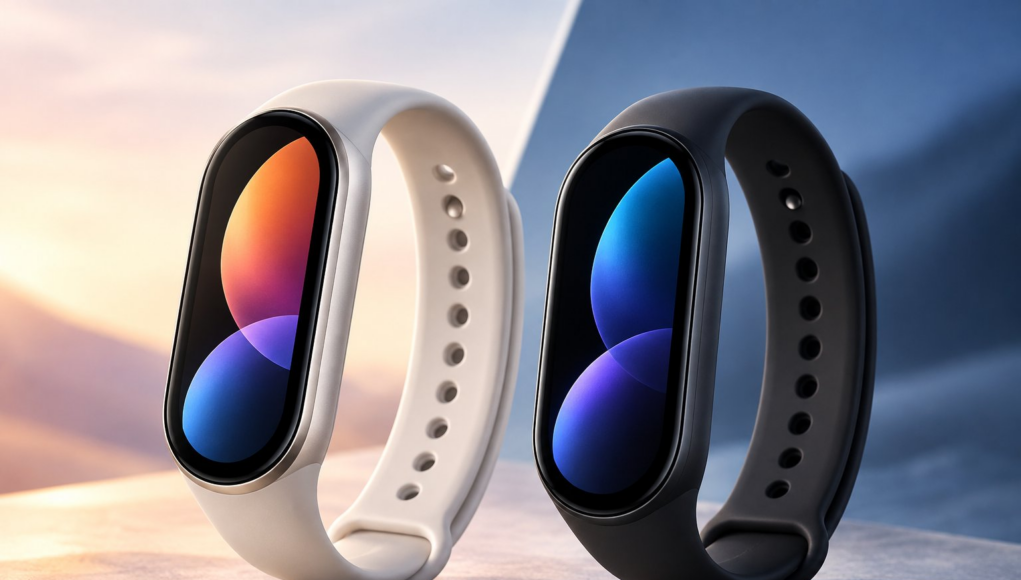
Xiaomi’s Smart Band 11 is now official, and it is a refinement rather than a redesign. It keeps the Smart Band 10’s 1.72-inch AMOLED display, 150-plus sports modes, 5ATM water resistance, and headline 21-day battery claim.
The main changes are a thinner body, higher brightness rating, upgraded heart-rate and blood-oxygen sensing, sleep HRV tracking, and Xiaomi HyperOS 4. For current Smart Band 10 owners, those are useful upgrades, but several core specifications have barely moved.
| Feature | Smart Band 11 | Smart Band 10 |
|---|---|---|
| Display | 1.72-inch AMOLED, up to 2,000 nits claimed | 1.72-inch AMOLED, 1,500-nit HBM |
| Thickness | 9.99mm | 10.95mm |
| Weight | From 15.58g | 15.95g |
| Battery | 233mAh reported; up to 21 days | 233mAh; up to 21 days |
| Sports modes | 150+ | 150+ |
| Sleep | HRV plus AI interpretation | Scores, trends, 21-day improvement plan |
| Built-in GPS | Not announced | No |
Brighter screen, thinner body
Smart Band 11 keeps the same 1.72-inch AMOLED size and 2mm bezels, but Xiaomi now rates the screen at up to 2,000 nits. The Smart Band 10 specifications list 1,500-nit HBM brightness.
Xiaomi also cut the body from 10.95mm to 9.99mm and trimmed the standard model from 15.95g to as little as 15.58g without the strap. The weight difference is tiny, but the slimmer body should be more noticeable during overnight wear.
Battery capacity appears unchanged at 233mAh based on certification reporting, while Xiaomi again claims up to 21 days of use. More than 150 sports modes and 5ATM water resistance also carry over.
Xiaomi has not announced built-in GPS for the standard Band 11. Buyers who need independent route tracking can get dual-band GPS on devices such as the HONOR Watch 6, although that is a larger and more expensive smartwatch.
Sleep HRV is the clearest health upgrade
Smart Band 11 adds sleep HRV monitoring plus AI-generated sleep interpretation and recommendations. Xiaomi also says the new model uses upgraded heart-rate and blood-oxygen sensing.
Smart Band 10 already tracks heart rate, SpO2, stress, sleep, menstrual cycles, training load, and recovery time. Its sleep tools include scores, trend reports, and a 21-day improvement plan, so Band 11 adds depth rather than replacing a basic health suite.
Xiaomi HyperOS 4 is another generational change. Launch material also emphasizes Android and iOS compatibility and improved Apple-device integration, although exact feature support may vary when international versions arrive.
For buyers who want deeper training metrics, maps, and standalone navigation, the Garmin Fenix 9 and Fenix 9 Pro sit in a different class, with far higher prices to match.
Band 10 owners can probably wait
In China, Xiaomi lists the standard Smart Band 11 at CNY 299, with a CNY 289 introductory price. The NFC version is CNY 349, or CNY 339 during the launch promotion, while the Ceramic and All-metal editions cost CNY 399.
Launch reporting based on Xiaomi’s announcement says international availability has not yet been confirmed.
That leaves Smart Band 10 as the easier purchase outside China for now. Existing Band 10 owners have even less reason to rush: screen size, sports-mode count, water resistance, battery capacity, and claimed endurance are effectively unchanged.
The brighter display rating, thinner body, sleep HRV, and newer sensors are the meaningful upgrades. Anyone considering a move to a full smartwatch should also compare the broader health, battery, and compatibility tradeoffs between the Pixel Watch 5 and Galaxy Watch9.
For first-time buyers or owners of much older Xiaomi bands, Smart Band 11 is the better model on paper. Band 10 owners can reasonably wait for global pricing before deciding whether the refinements justify replacing a still-capable tracker.
Also read: The Apple Watch Ultra 3 and Galaxy Watch Ultra2 take a different approach to wearable upgrades, with bigger differences in price, battery life, and ecosystem.